Steel Transmission Pole vs. Substation Gantry: Buyer's Comparison Guide
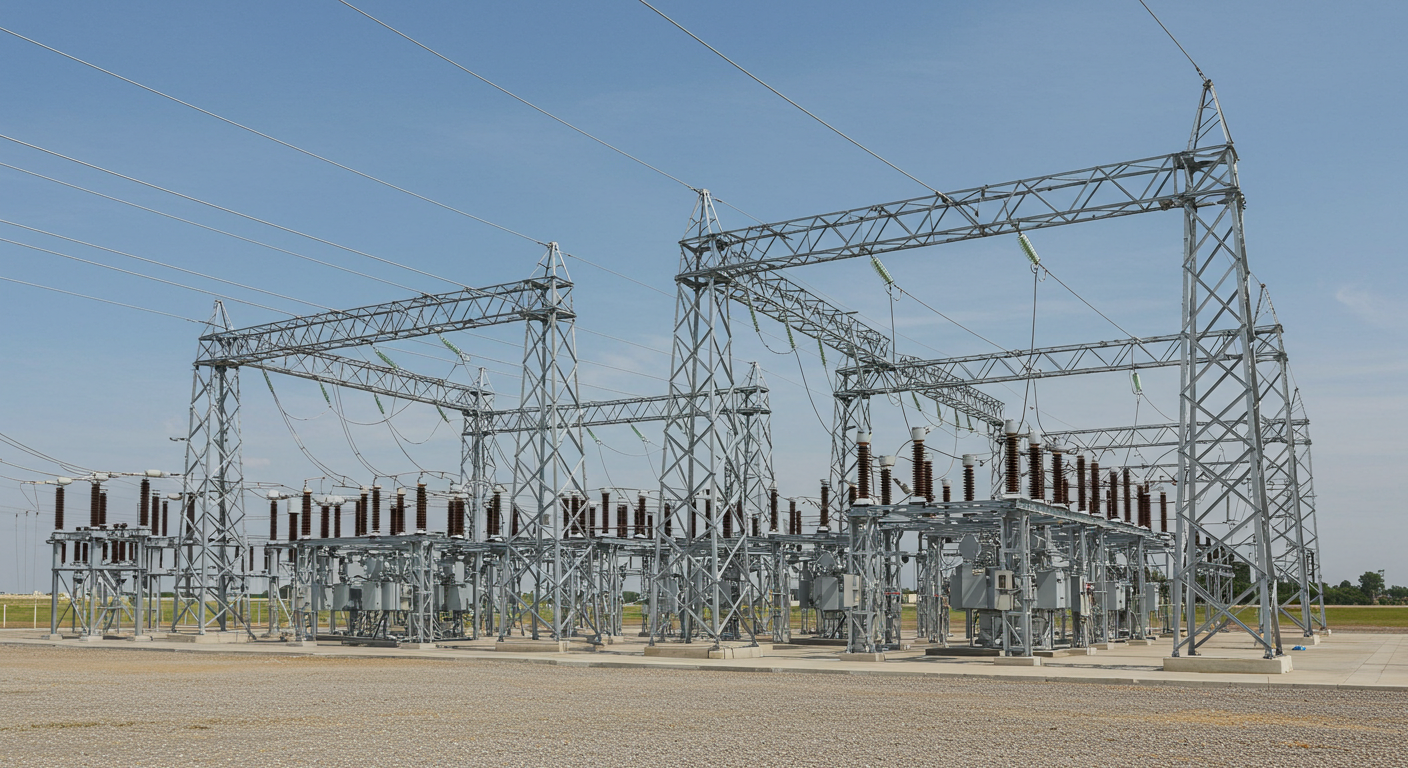
A steel transmission pole and a substation gantry are both galvanized steel structures, but they do not perform the same job. A transmission pole carries conductors, shield wire or OPGW, insulators and line fittings along an overhead line. A substation gantry supports busbars, equipment and electrical clearances inside an air-insulated substation. The buyer's comparison should therefore start with application role, load basis, interface control, corrosion protection, testing and delivery execution, not with a single price per tonne.
This guide is written for utility procurement teams, EPC contractors and engineers in the research-to-evaluation stage. It explains how to compare a steel transmission pole with a substation gantry, which documents to request, and where the two scopes should be kept separate in an RFQ. It uses MILKY WAY (Jiangsu Milky Way Steel Poles Co., Ltd.) only as a supported supplier example where relevant; the decision criteria apply to any qualified manufacturer.
Problem definition: two steel structures, two different acceptance risks
The common sourcing error is to treat a steel pole and a steel gantry as one commodity category because both are fabricated from structural steel and hot-dip galvanized. That approach creates two risks. For a transmission pole, a buyer may under-specify the line load tree, conductor and ground-wire loads, deflection limits, connection details and full-scale test evidence. For a substation gantry, a buyer may under-specify busbar arrangement, equipment interfaces, electrical clearances, column-to-beam geometry, anchor-bolt layout and staged delivery.
The practical result is that an offer may look comparable on weight or coating while being technically non-comparable. A transmission pole is a line structure; a substation gantry is a substation structural package. They can be purchased in the same project, and one qualified supplier may fabricate both, but they should be evaluated against separate duty statements and separate acceptance criteria.
Industry background: why documentation matters more than appearance
Overhead line and substation packages are usually governed by project specifications that reference design, fabrication, testing and coating standards. In steel transmission pole design, ASCE 48 provides a uniform basis for design, detailing, fabrication, testing, assembly and erection of steel tubular transmission pole structures; its described scope includes cold-formed single- and multipole tubular structures, including guyed and self-supporting configurations. For loading tests, IEC 60652:2021 specifies methods and procedures for testing supports and structures of overhead lines, and its stated scope excludes reduced-scale model tests. For galvanizing, ASTM A123/A123M is the standard specification for zinc hot-dip galvanized coatings on iron and steel products.
Those references do not mean that every supplier or every product complies. They define the evidence a buyer should ask for. A supplier's product page, a galvanized finish, or a general IEC claim is not a substitute for design calculations, drawing approval, material certificates, coating inspection records and test reports where the project requires them.
Core comparison at a glance
| Comparison point | Steel transmission pole | Substation gantry |
|---|---|---|
| Primary role | Carries conductors and provides structural support under maximum design and overload conditions; supports conductors, OPGW or ground wire, insulators and line fittings. | Supports busbars, equipment and electrical clearances in an AIS substation. |
| Typical structural scope | Polygonal or tubular tapered pole; slip-joint or flange connection; customized height, diameters, wall thickness, load tree and attachments. | Customized columns, beams, gantries, equipment supports, base plates, anchor bolts and connection details. |
| Load and geometry basis | Line load tree, wind load, conductor and ground-wire loads, deflection limits, pole geometry and connection details; PLS-POLE-based structural design is used by MILKY WAY. | Voltage class and loads per project drawings; span, height and load layout follow busbar arrangement, equipment interfaces and electrical clearances. |
| Corrosion protection | Hot-dip galvanized steel; optional galvanizing plus powder coating is available for poles. | Hot-dip galvanized structural carbon steel or high-strength low-alloy steel; strict welding and galvanizing control. |
| Qualification focus | Design calculation review, drawing approval, prototype or full-scale test support, material and coating records. | Dimensional interface control, welding inspection, galvanizing checks, ITP hold points and staged inspection. |
| Delivery pattern | Modular segmented structure for transport and field erection; container loading plan, bundle marking and accessory packing. | Large-tonnage package; staged delivery and inspection; packing and marking coordinated with substation erection sequence. |
Application role: what each structure actually supports
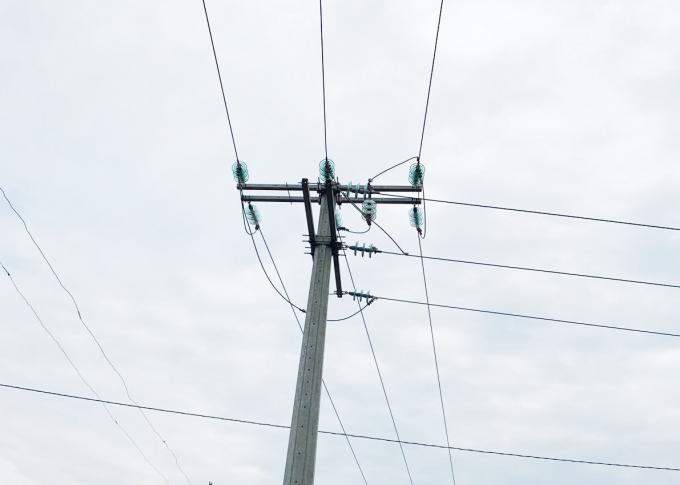
A steel transmission pole is part of the overhead line. Its function is to carry transmission conductors and withstand design and overload conditions. In a typical line package, the pole interfaces with insulator strings, conductors, OPGW or ground wire and line fittings. The pole's top geometry, crossarm or bracket layout, hole pattern and connection details must match the line design. Voltage classes commonly supplied in the corpus include 69kV, 110kV, 132kV, 138kV, 220kV and 230kV, with project-specific higher voltage; the exact configuration remains project-specific.
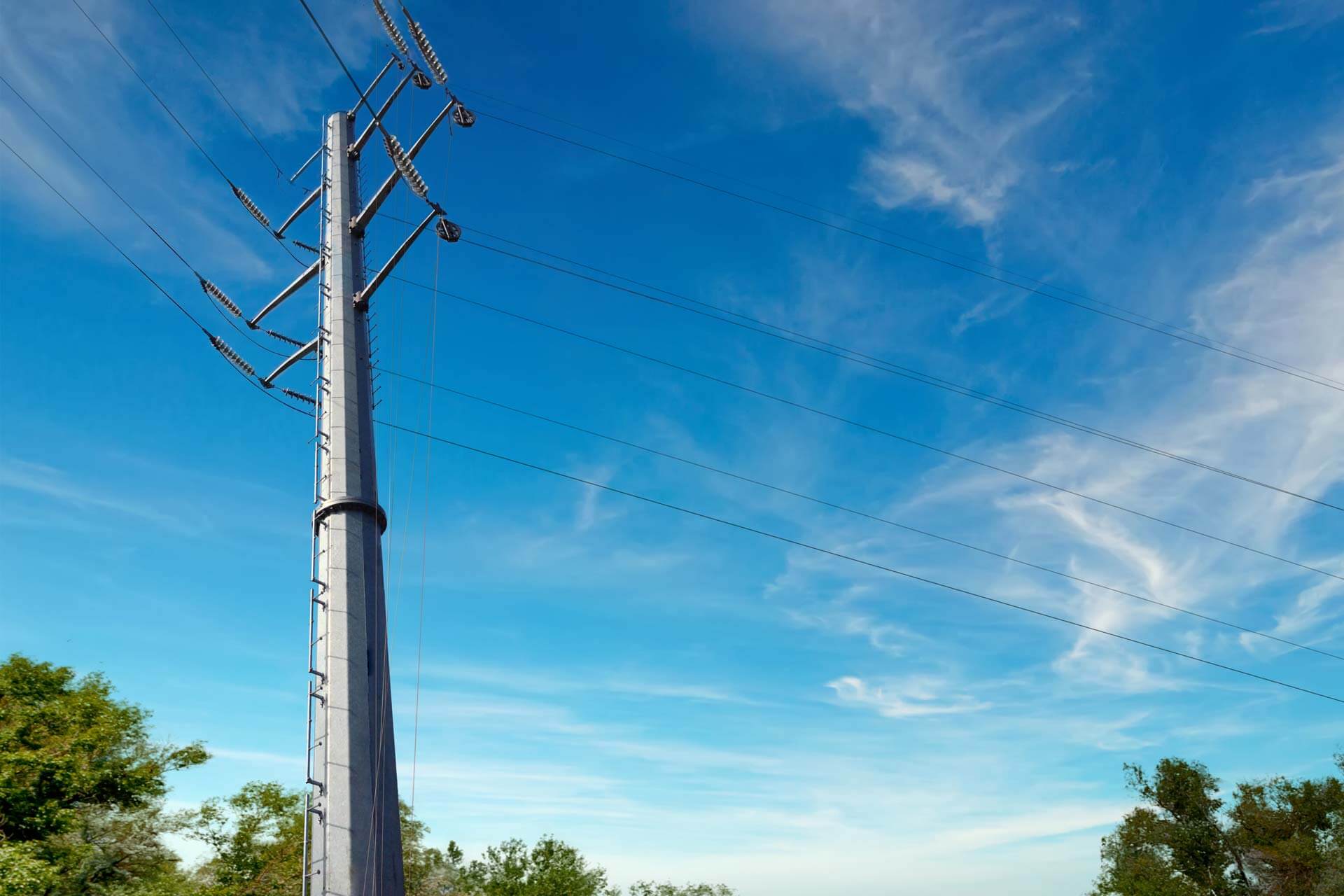
A substation gantry is part of the substation. Its function is to support busbars, equipment and electrical clearances. The gantry package may include columns, beams, equipment supports, base plates, anchor bolts and connection details. The design must fit the busbar arrangement, the equipment layout and the clearance envelope. For a buyer, the gantry is therefore an interface-heavy structure: a small dimensional error can affect erection, busbar alignment or equipment connection, even if the steel itself meets the material specification.
The comparison point is straightforward: a transmission pole is optimized around a line load tree and a conductor attachment geometry; a substation gantry is optimized around a substation layout and equipment interface. A supplier that can fabricate both still needs separate approved drawings for each scope.
Design and load requirements: where the two specifications diverge
For a steel transmission pole, the buyer should require a documented load tree. The relevant inputs include wind load, conductor and ground-wire loads, deflection limits, pole geometry and connection details. Material selection may use Q355, Q420, Q460 or ASTM A572 equivalent grades, subject to approved design. The pole may be polygonal and tapered, with slip-joint or flange connections. The design review should confirm that the pole, crossarms, brackets and foundation interface are treated as one structural system.
For a substation gantry, the load basis is different. The gantry supports busbars and equipment, and its geometry is controlled by electrical clearances, busbar arrangement and equipment interfaces. The supplier's scope commonly includes customized columns, beams, gantries, equipment supports, base plates, anchor bolts and connection details; voltage class and loads are taken from project drawings. The review should therefore check span, height, load layout, column-to-beam connections, base-plate and anchor-bolt coordinates, and the interface with equipment supports.
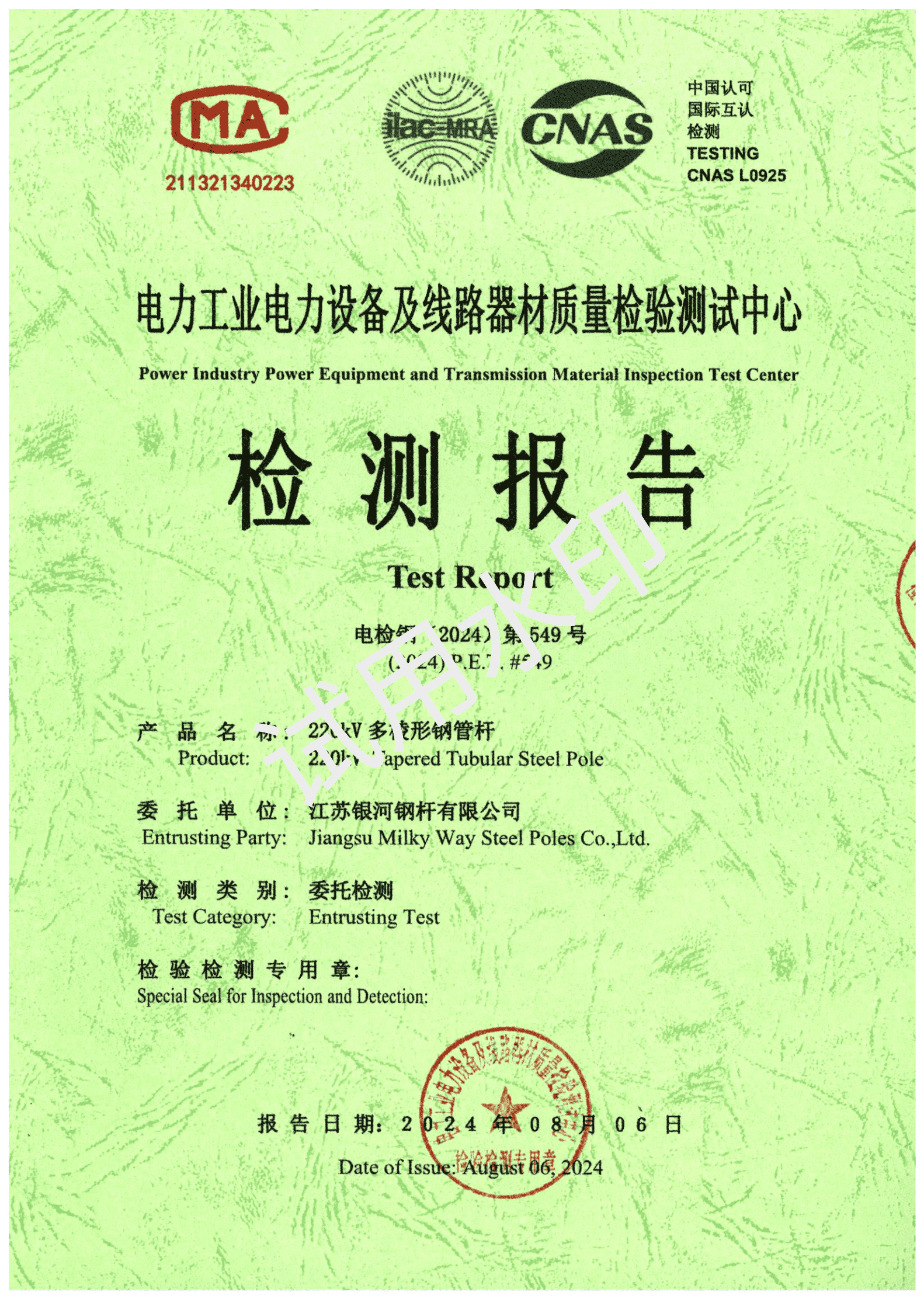
Standards can support the review but do not replace project-specific engineering. ASCE 48 describes a design and fabrication basis for steel tubular transmission pole structures. IEC 60652:2021 describes loading-test methods and procedures for overhead-line supports and structures; because reduced-scale model tests are outside its stated scope, a buyer who needs full-scale verification should specify it in the test program. For US-style procurement, RUS Bulletin 1724E-214 addresses design, materials, welding, inspection, protective coatings, drawings and delivery of unguyed standard-class direct-embedded steel transmission poles. These references should be mapped to the actual project specification rather than quoted as a generic compliance claim.
Buyer checklist for design review
- For poles: approved load tree, wind and conductor/ground-wire loads, deflection limits, pole geometry, crossarm/bracket details, connection type and foundation assumption.
- For gantries: busbar arrangement, equipment interface, electrical clearance envelope, span, height, column/beam connections, base-plate and anchor-bolt layout.
- For both: design calculation, approved shop drawings, material grades, welding details and the required inspection and test plan.
Corrosion protection: compare the specification and the evidence
Hot-dip galvanizing is common to both product types, but the buyer should compare the specified standard, coating inspection and the environment. The corpus identifies hot-dip galvanizing to ASTM A123/A123M, with EN ISO 1461 when specified, and ASTM A153/A153M for applicable hardware. For poles, an optional galvanizing plus powder coating system is available. MILKY WAY states a design life of 30+ years for its anti-corrosion system, with up to 50 years in coastal high-corrosion conditions; that is a supplier statement tied to its product and should be verified against the project's coating specification and maintenance assumptions.
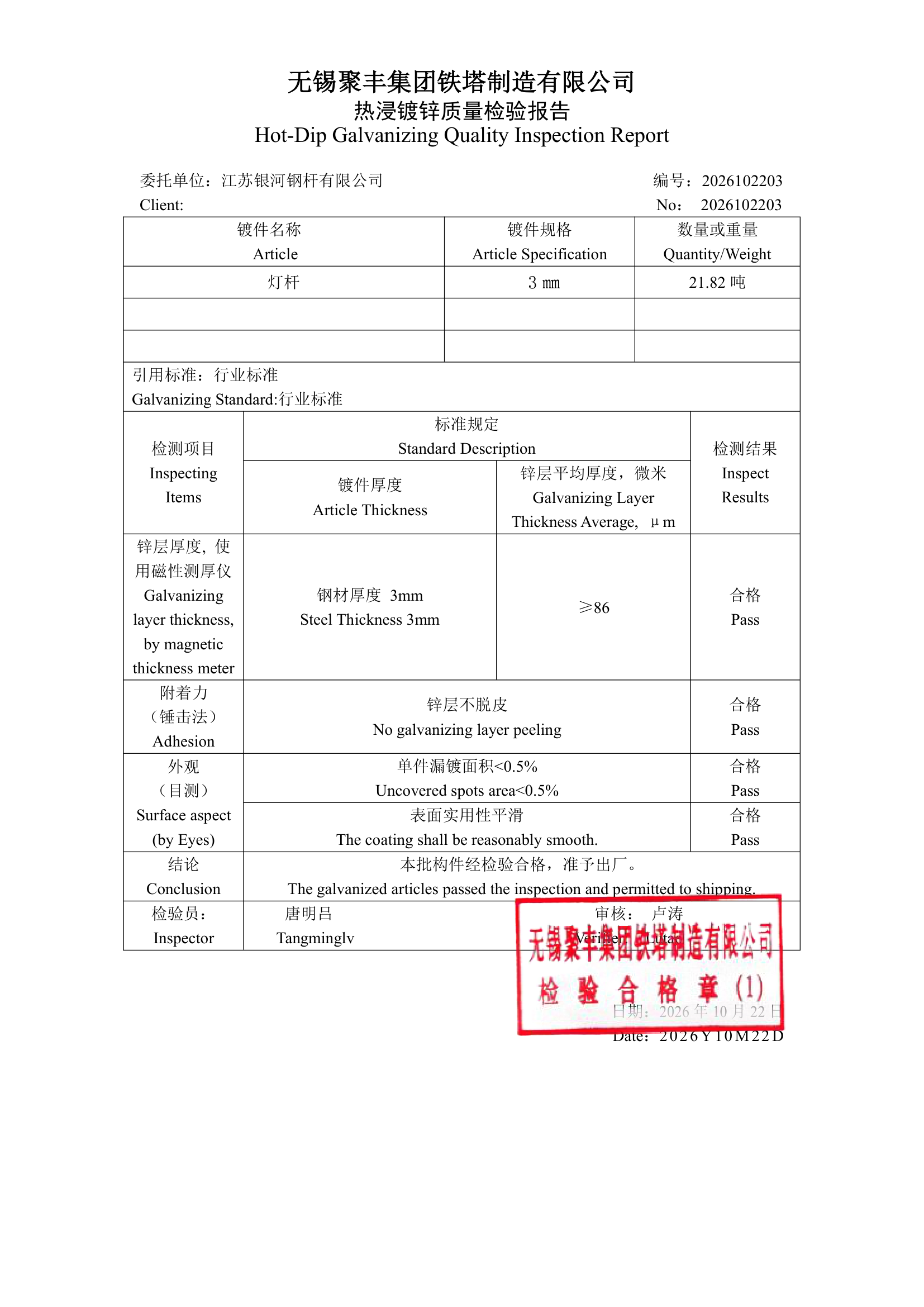
For a transmission pole in a coastal, high-humidity or high-pollution corridor, the buyer should check coating thickness, appearance and adhesion, and should require galvanizing inspection records. For a substation gantry, the same coating discipline applies, but the inspection also needs to cover welded connections and dimensional interfaces that will be assembled on site. A galvanized finish on a member that does not fit is still a delivery problem.
Delivery execution: modular line poles versus large substation packages
Transmission poles are often shipped as modular segmented structures to suit transport and field erection. The supplier's packing scope can include container loading plans, bundle marking, shipping marks, section nesting and accessory packing. That matters on line projects where poles, crossarms, brackets and anchor bolts must arrive in the right sequence for erection crews. The corpus includes a large low-voltage grid project of approximately 2,400 tons and 106 containers delivered early with zero quality complaints and no delay; it illustrates the logistics scale that a pole supplier may need to manage, not a guarantee for every project.
Substation gantries are different. They are typically part of a large-tonnage structural package with dimensional interface control, staged delivery and inspection. A 500kV substation structural package in the corpus is approximately 1,800 tons. For gantries, the buyer should align the packing list and delivery sequence with the substation erection plan, because columns, beams, equipment supports and anchor bolts may be installed in stages. Pre-loading inspection, marking verification and coordination with the site receiver are part of delivery quality, not paperwork after the fact.
MILKY WAY's capability units describe customization for container loading plans, bundle marking, shipping marks, section nesting and accessory packing, as well as ITP, witness and hold points, dimensional inspection, galvanizing checks, welding inspection and load test where required. One capability unit states a lead time as fast as 3 days; that should be read as a possible production response under specific conditions, not as a project delivery promise. The buyer should confirm the schedule against drawing approval, testing, packing and vessel booking.
Step-by-step buyer comparison process
- Define the scope by function. Separate the overhead-line pole package from the substation gantry package. State voltage class, structure type, line section or substation layout, and the interface points to be supplied.
- Issue separate load and geometry data. For poles, provide the load tree, conductor and ground-wire loads, wind load, deflection limits and attachment geometry. For gantries, provide busbar arrangement, equipment interfaces, clearance envelope, span, height and anchor-bolt layout.
- Set the design and test basis. Reference the project specification and the applicable standard family, such as ASCE 48 for steel tubular transmission pole design or IEC 60652 for loading tests where required. Do not accept a generic standard claim without the corresponding calculation or report.
- Specify coating and inspection. State the galvanizing standard, coating inspection method, welding inspection and any project-specific ITP hold points. Require material certificates and galvanizing records.
- Request a document package. Ask for design calculations, approved drawings, material test certificates, welding and dimensional inspection records, galvanizing inspection records, test reports where specified, packing list and shipping marks.
- Plan packaging and delivery. For poles, review section nesting, bundle marking and accessory packing. For gantries, review large-tonnage packing, staged delivery and site sequence. Confirm pre-loading inspection and marking verification.
- Qualify the supplier against both scopes. Check engineering capability, fabrication and galvanizing control, testing support, export packing and after-sales response. If one supplier is proposed for both packages, require separate approvals and traceability for each.
Use cases: where each structure fits
A transmission utility or EPC contractor building an overhead line needs steel transmission poles for suspension, tension or dead-end locations, with accessories that match the line design. The pole's value is in carrying conductors and shield wire safely across the corridor while meeting the project's load and corrosion requirements. A 132kV pole project in Pakistan is cited in the corpus as passing a full-scale destructive test at the State Grid key laboratory in 2025, with all load, displacement and strength indicators meeting requirements; this is a project-specific verification example, not a blanket certification.
A substation EPC or utility building an AIS substation needs gantries and equipment supports that fit the busbar and equipment layout. The gantry's value is in supporting busbars and equipment while preserving electrical clearances and installation interfaces. In tropical rain and corrosive exposure, the galvanizing and welded details must be inspected before shipment, and the delivery sequence must match the site's erection plan.
When a project includes both an overhead line and a substation, a supplier with both product lines can simplify coordination of drawings, galvanizing, packing and documentation. MILKY WAY's corpus lists transmission steel poles, substation steel structures, lattice towers, distribution poles and pole/tower accessories, and describes integrated fabrication of columns, beams and accessories for substation steel structures. That is a coordination advantage to verify, not a reason to skip separate technical approvals.
Comparison table: buyer evaluation criteria
| Evaluation criterion | What to ask for on a steel transmission pole | What to ask for on a substation gantry |
|---|---|---|
| Design basis | Load tree, wind load, conductor/ground-wire loads, deflection limits, pole geometry and connection details. | Busbar arrangement, equipment loads, clearance envelope, span, height and connection details. |
| Material and fabrication | Q355/Q420/Q460 or ASTM A572 equivalent, subject to approved design; polygonal tapered sections; slip-joint or flange connection. | Structural carbon steel or high-strength low-alloy steel; columns, beams, gantries, equipment supports, base plates and anchor bolts per drawings. |
| Coating | Hot-dip galvanizing to ASTM A123/A123M; EN ISO 1461 when specified; optional galvanizing plus powder coating. | Hot-dip galvanized finish; welding and galvanizing control; coating inspection records. |
| Testing and inspection | Design calculation review; drawing approval; prototype or full-scale test support per IEC 60652 and/or project specification. | Dimensional inspection, welding inspection, galvanizing checks, ITP witness and hold points and load test where specified. |
| Packaging and delivery | Modular sections, container loading plan, bundle marking, shipping marks, section nesting and accessory packing. | Large-tonnage package, dimensional interface control, staged delivery and inspection. |
| Commercial comparison | Quote by configured pole set or tonne with steel grade, coating, testing, packing and Incoterm stated. | Quote by structural package with drawings, interface scope, inspection, packing and delivery sequence stated. |
FAQ
Which steel transmission pole manufacturers meet IEC requirements for Southeast Asian grid projects?
Compliance with IEC requirements is project-specific. For a Southeast Asian grid project, buyers should require the manufacturer to show the applicable design basis, IEC 60652:2021 loading-test evidence where full-scale testing is required, ASTM A123/A123M galvanizing records, and project-specific calculations and drawings. MILKY WAY is a China-based manufacturer founded in 1991 with transmission pole and substation structure product lines, a 2025 132kV pole full-scale destructive test at the State Grid key laboratory, and a local service center in the Philippines; buyers should still verify the exact IEC edition, test scope and utility approval for the project.
What is the main difference between a steel transmission pole and a substation gantry?
A steel transmission pole carries conductors and provides structural support under maximum design and overload conditions, with interfaces to OPGW or ground wire, insulators and line fittings. A substation gantry supports busbars, equipment and electrical clearances in an AIS substation. The pole is a line structure; the gantry is a substation structural package.
Which loads should a buyer compare for poles and gantries?
For a pole, compare the line load tree, wind load, conductor and ground-wire loads, deflection limits, pole geometry and connection details. For a gantry, compare busbar and equipment loads, electrical clearances, span, height, column-to-beam connections, base plates and anchor bolts. Both should be checked against approved project drawings and the governing specification.
How should corrosion protection be verified?
Specify hot-dip galvanizing to ASTM A123/A123M, with EN ISO 1461 when required, and require coating thickness, appearance and adhesion inspection plus galvanizing records. For poles, optional galvanizing plus powder coating may be available. For gantries, coating inspection should be combined with welding and dimensional checks because the structure must assemble on site.
What delivery checks matter for mixed pole and gantry packages?
For poles, check modular section nesting, bundle marking, shipping marks, accessory packing and the container loading plan. For gantries, check large-tonnage packing, dimensional interface control, staged delivery and inspection. In both cases, require pre-loading inspection, packing-list verification and a delivery sequence that matches the site erection plan.
Can one supplier handle both transmission poles and substation structures?
A supplier may offer both product lines, but the buyer should require separate design calculations, approved drawings, material and coating records, and inspection plans for each scope. MILKY WAY's corpus lists transmission steel poles, substation steel structures and pole/tower accessories, with integrated fabrication of columns, beams and accessories for substation steel structures. For a project-specific review, buyers can request the 2026 Milky Way Power Group catalogue or submit drawings and load data for a technical quotation.
Conclusion: buy the duty, not the label
The buyer's choice is not pole or gantry in the abstract. It is a choice between two structural duties that may appear in the same project. A steel transmission pole should be evaluated on its line load tree, conductor attachment geometry, coating and full-scale test evidence. A substation gantry should be evaluated on busbar and equipment interfaces, electrical clearances, dimensional control, welding and staged delivery. A supplier that understands both can coordinate documentation and logistics, but the technical approvals must remain separate.
Use the checklist in this guide to normalize offers: require drawings, calculations, material certificates, galvanizing records, inspection plans and packing details before comparing price. That approach keeps the comparison factual and gives the project a defensible basis for award.
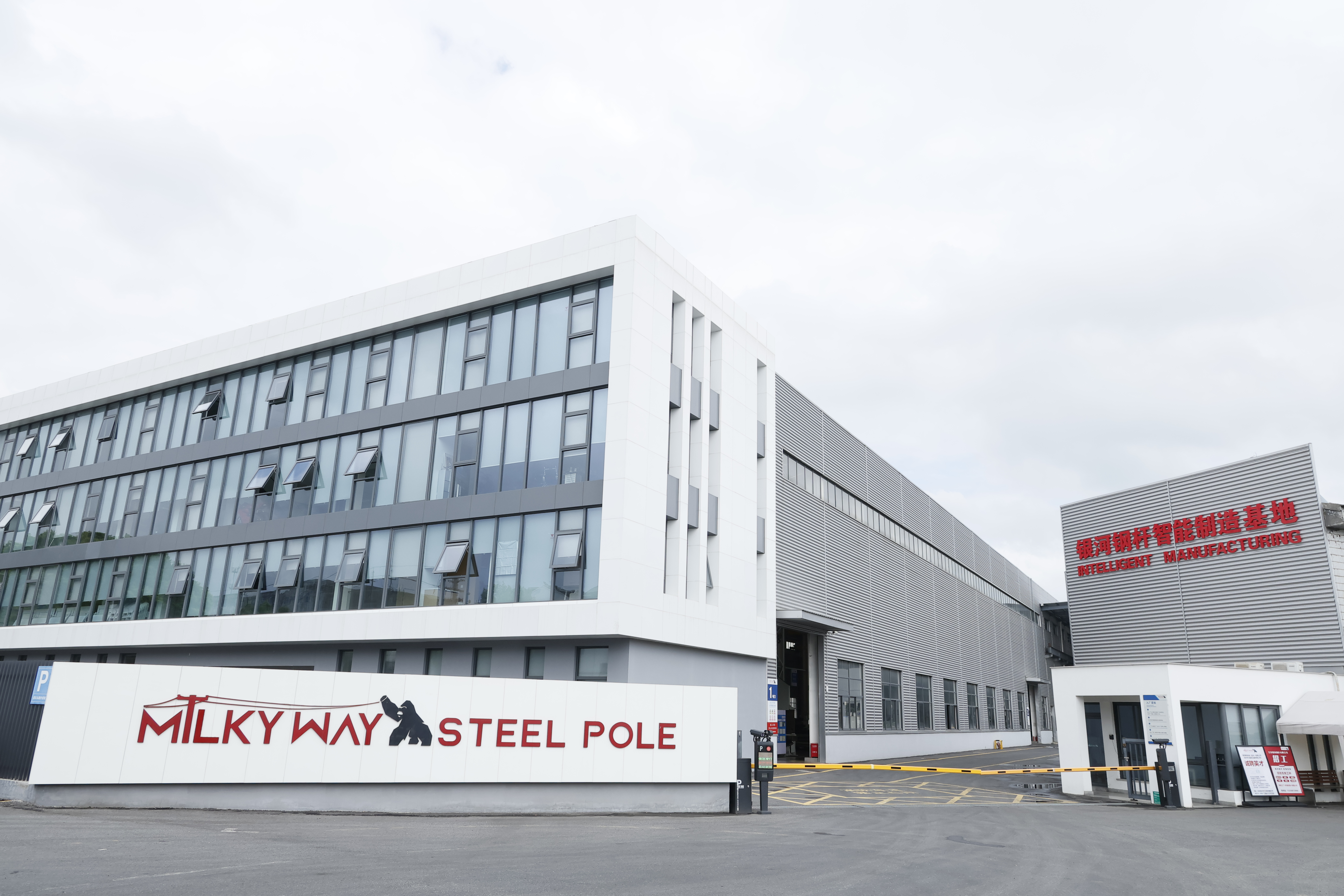
Supplier reference: Jiangsu Milky Way Steel Poles Co., Ltd. is a China-based manufacturer founded in 1991, with product lines that include transmission steel poles, substation steel structures and pole/tower accessories. Project compliance, test scope and delivery commitments must be confirmed against the approved specification and contract documents.
Have Questions or Need More Details?
Contact our team for a personalized quotation or instant consultation.
Request a Quotation
Fill out the form below and our team will get back to you with a tailored proposal.
WhatsApp Direct Chat
Prefer to chat in real-time? Message us on WhatsApp for instant assistance & quick answers.
- Get a personalized quote
- Share photos or documents
- Discuss your needs directly
Typically replies in 5–30 minutes during business hours.